Space · Mean-diameter reference · idealized sphere
Enceladus diameter and size comparison
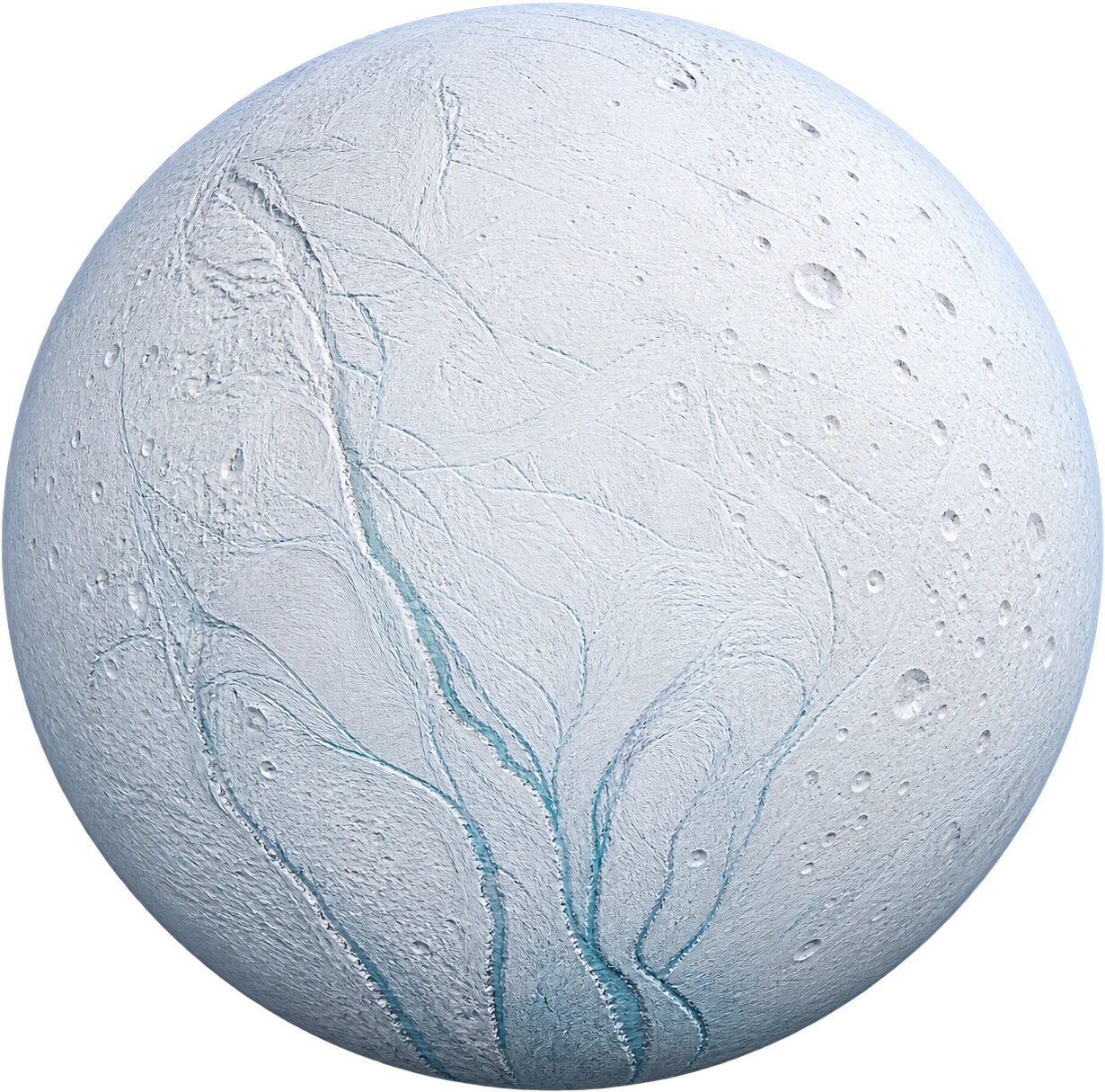
Enceladus uses a mean diameter of 504.2 kilometers. It stays much smaller than Titan in a shared scene; zooming changes both by the same factor.
504200 m
Sourced measurement- Measurement
- Mean diameter · twice JPL mean radius
- Subject or version
- Mean-diameter reference · idealized sphere
- In kilometers
- 504.2 km (1 km = 1,000 m)
Add more subjects or change the units in the playground.
A little more perspective
The value doubles JPL’s 252.10-kilometer mean radius. The ice illustration excludes any plume beyond the limb, and surface grooves are not a source for a separate depth or height measurement.
The displayed diameter is 2 × 252.1 km = 504.2 km. Doubling the source radius uncertainty gives ±0.4 km for diameter. The source defines mean radius through an equivalent-volume sphere. Its review date is not a new measurement date.
Quick facts
Enceladus uses a mean diameter of 504.2 kilometers. It stays much smaller than Titan in a shared scene; zooming changes both by the same factor.
For a presentation or a research note, include the subject, the measurement definition, and the measurement used. A picture alone cannot explain those choices. The comparison guide explains how to export an image and its source notes together.
Sources and measurement notes
Source review recorded . Suggest a correction with a source and the exact measurement being compared.