Space · Deployed spacecraft · high-gain antenna reference
How wide is a voyager 1?
NASA gives Voyager’s high-gain antenna diameter as approximately 3.7 meters.
≈ 3.7 m
Sourced measurement- Measurement
- High-gain antenna diameter · approximately 3.7 meters
- Subject or version
- Deployed spacecraft · high-gain antenna reference
- Using this value
- A starting value for the illustration, not a universal or confirmed height.
Add more subjects or change the units in the playground.
A little more perspective
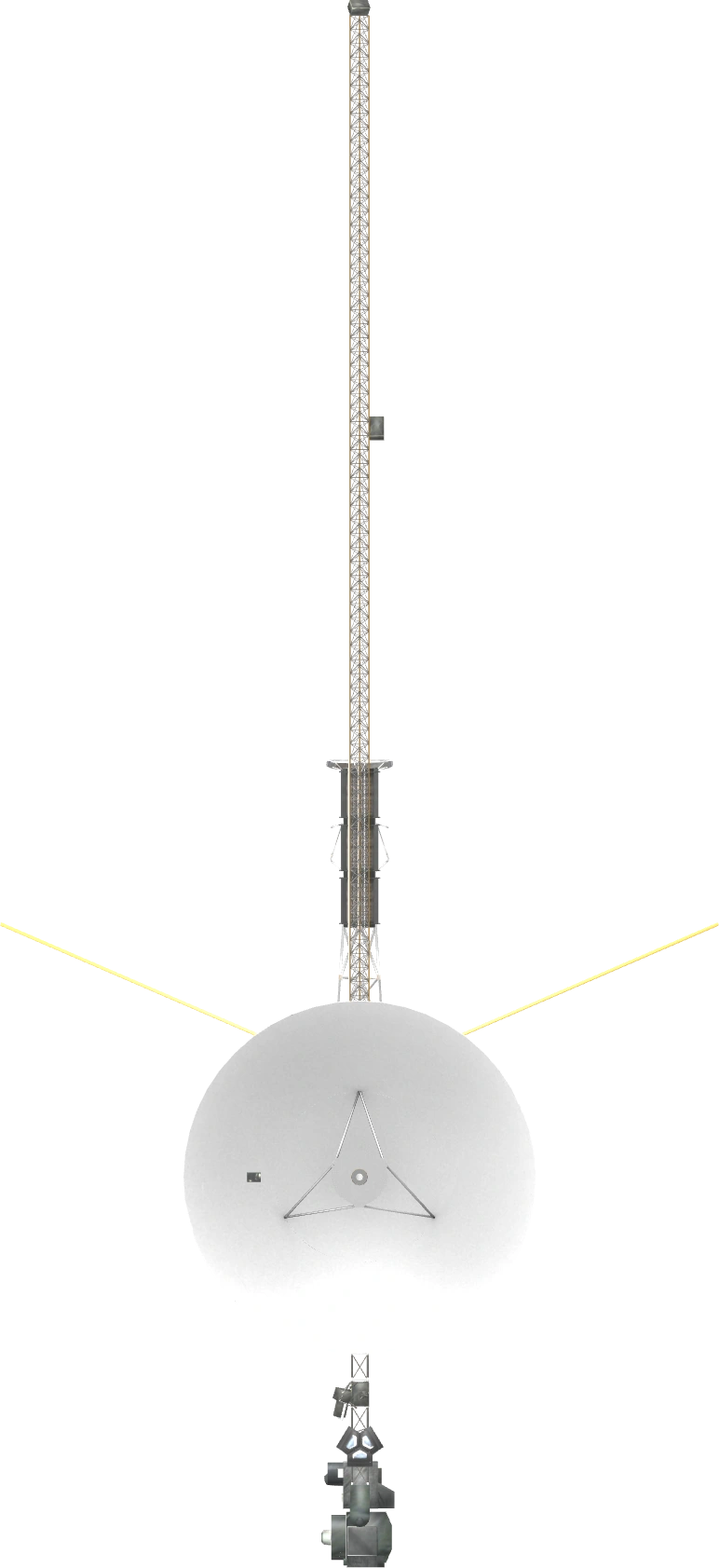
NASA gives Voyager’s high-gain antenna diameter as approximately 3.7 meters. This entry measures across that reflector, inside the larger deployed spacecraft outline. The long magnetometer boom and radio antennas remain visible but are outside the diameter’s endpoints.
Voyager has several much longer appendages: NASA lists a 13-meter magnetometer boom and two 10-meter radio and plasma-wave antennas. Its approximately 3.8-meter spacecraft height also uses a defined reflector-to-feet axis. The selected dish diameter keeps those different measurements explicit rather than treating every deployed tip as one body height.
Orthographic rendering of the unchanged NASA outreach 3D model of the twin Voyager spacecraft. Only the high-gain reflector diameter is calibrated to the separate approximate 3.7-meter reference. Boom lengths, radio antennas and other components retain the approximate outreach-model geometry; angled components are foreshortened in this frontal dish view. This is not engineering CAD, a dimensional survey or a photograph.
Quick facts
NASA gives Voyager’s high-gain antenna diameter as approximately 3.7 meters.
For a presentation or a research note, include the subject, the measurement definition, and the assumed measurement. A picture alone cannot explain those choices. The comparison guide explains how to export an image and its source notes together.
Sources and measurement notes
- NASA: Voyager FAQ, spacecraft and boom dimensions
- NASA: original outreach 3D model
- NASA images and media usage guidelines
High-gain antenna diameter · approximately 3.7 meters.
Source review recorded . Suggest a correction with a source and the exact measurement being compared.