Space · Deployed main assembly · pre-iROSA appearance
How wide is a international space station?
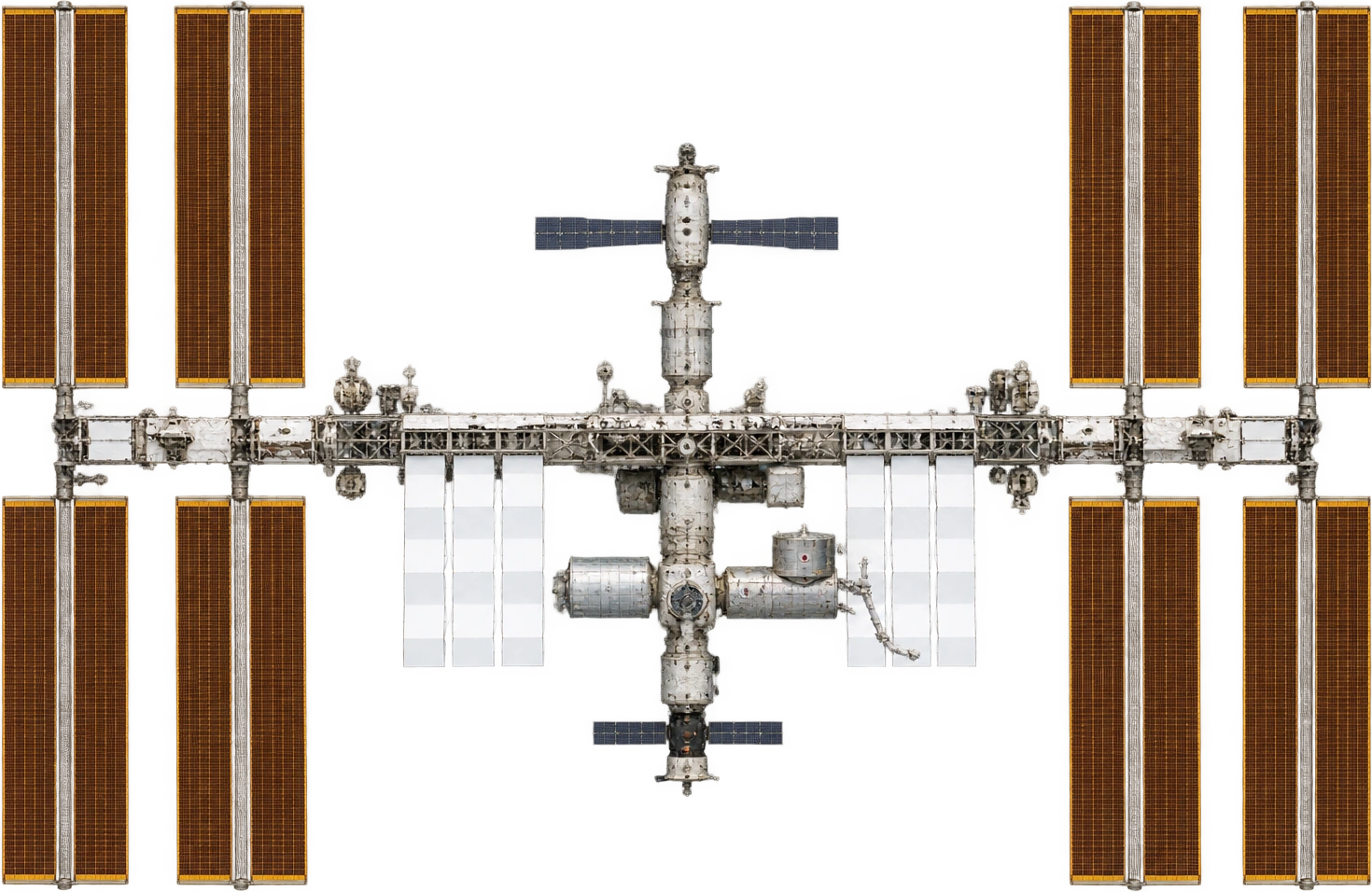
NASA gives the station’s overall structure as 109 meters across the arrays and 51 meters along the named module axis.
109 m
Sourced measurement- Measurement
- Overall span across arrays · NASA 109-meter reference
- Subject or version
- Deployed main assembly · pre-iROSA appearance
- In feet, rounded
- 357.6 ft (1 ft = 0.3048 m)
Add more subjects or change the units in the playground.
A little more perspective
NASA gives the station’s overall structure as 109 meters across the arrays and 51 meters along the named module axis. This comparison uses the 109-meter span, with the main truss horizontal and the solar arrays deployed. It does not use the station’s orbital altitude as an object dimension.
The long truss, solar arrays and pressurized modules run along different axes. NASA defines the 51-meter module dimension from the forward end of PMA2 to the aft end of the service module; that shorter reference is not interchangeable with the 109-meter span. The illustration selects the legacy solar-array appearance before the iROSA additions began in 2021.
Quick facts
NASA gives the station’s overall structure as 109 meters across the arrays and 51 meters along the named module axis.
For a presentation or a research note, include the subject, the measurement definition, and the measurement used. A picture alone cannot explain those choices. The comparison guide explains how to export an image and its source notes together.
Sources and measurement notes
- NASA: International Space Station dimensions
- NASA: new arrays and the existing four pairs, January 2021
Source review recorded . Suggest a correction with a source and the exact measurement being compared.